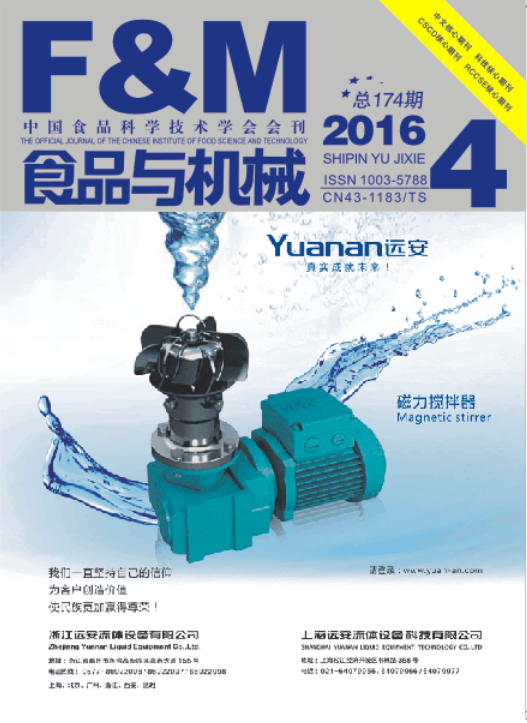
Volume 32, Issue 4 (2016)
Fundamental Research
Effects of barley β-glucan on pasting and rheological properties of wheat flour
LI Yuan, ZHOU Huiming, GUO Xiaona, ZHU Kexue, and PENG Wei
Date posted: 4-28-2016
DOI: https://doi.org/10.13652/j.issn.1003-5788.2016.04.001
In the present study, the influence was investigated from water extracted barley β-glucan (BBG) on the pasting and rheological properties of wheat flour. Results showed that the values of wet gluten content decreased with the addition ratio of BBG increased. The presence of BBG induced an increase of peak viscosity, trough viscosity, breakdown and peak viscosity, while the setback value showed a decreasing tendency. Compared with the control, with increasing of the water absorption of dough, the development time, the stability and the weakening value reduced. Lower modulus (G′, G″) and tan δ values were observed in dynamic viscoelasticity measurements.
Residual protein treated by alkali on pasting properties of indica rice
LI Yan, GAO Wenming, and YI Cuiping
Date posted: 4-28-2016
DOI: https://doi.org/10.13652/j.issn.1003-5788.2016.04.002
The rice starch (RS), yellow starch (YS) and white starch (WS), which protein content were 2.36%, 4.23%, 0.38% respectively, were obtained after indica rice flour (protein content was 7.85%) treated by alkaline, and their pasting and structure properties were then studied. Results of RVA indicated that the peak viscosity, hot pasting viscosity and final viscosity of rice flour had significantly lower than rice starch, yellow starch and white starch (P<0.01), which agree with the result of the pasting temperature tested by DSC; RVA analysis also found that the viscosity between rice starch and yellow starch had no significant effect(P>0.05), while DSC result believed that the pasting temperature were approached between yellow starch and white starch. The structure analysis of the samples showed that transparency decreased with indica rice treated by alkali; the WS of average chain length was longest, while rice flour shortest; and as well the polymerization degree. To protein subunit, there were 60 ku, 33 ku, 22 ku and 13 ku mainly in rice flour and RS; 60 ku, 22 ku and 13 ku maily in YS, 60 ku, with 33 ku in WS. The results of microstructure showed that the interaction of protein or protein with fiber was different. This study demonstrated that, beside starch, the pasting property of indica rice flour was also affected by the content and composite of protein, and interaction of protein with fiber.
Mechanism of azodicarbonamide’s impact on protein cross-linking and quality of soy-wheat Chinese steamed bread
LIU Sha, GUO Xiaona, ZHU Kexue, LIU Gang, and ZHOU Huiming
Date posted: 4-28-2016
DOI: https://doi.org/10.13652/j.issn.1003-5788.2016.04.003
Report on protein cross-linking mechanism of soy-wheat Chinese steamed bread treated with azodicarbonamide (ADA) was less while it was known as quality improvement agent of wheat flour. The content of free thiol (—SH) was determined by DTNB method. Meanwhile, size-exclusion high performance liquid chromatography (SE—HPLC) and confocal laser scanning microscope (CLSM) were used to analyze the content of sodium dodecyl sulfate extractable proteins (SDSEP)and gluten network respectively. In addition, the specific loaf volume of soy-wheat Chinese steamed bread was determined by rapeseed displacement method. TPA was used to test the texture and the software Image J was applied to analyze the pore structure of soy-wheat Chinese steamed bread treated. The result showed that ADA reduced the content of —SH, which meant that the —S—S— content was increased. The SDSEP content was decreased and the extent of protein cross-linking was increased. ADA could promote proteins aggregating into dense and uniform network. Gelatinized starches were warped by protein framework. Moreover, ADA made no significant effect on specific loaf volume and also increased the hardness, gumminess and chewiness. The gas cell counts were increased, and average size and average friction of gas cells were decreased, along with the forming of uniform, dense and small pore structure. In combining the greater protein polymerization with the better quality characteristics of soy-wheat Chinese steamed bread, it indicated that there was inner relationship between protein cross-linking and the final quality characteristics of soy-wheat Chinese steamed bread.
Studies on degradation of pectin during pepper peeling by solid-state fermentation
WANG Mengjie, LIU Sixin, CHEN Haiming, HU Qisong, and LI Congfa
Date posted: 4-28-2016
DOI: https://doi.org/10.13652/j.issn.1003-5788.2016.04.004
Infrared spectroscopy, ion chromatography and HPLC were used to analyze the changes of pectin components and their contents during pepper peeling by solid-state fermentation. The results showed that the water-soluble pectin and acid-soluble pectin were high degree of esterification pectin, while the chelating pectin was low degree of esterification pectin. The content of water-soluble pectin increased in the first 36 h and then decreased during fermentation, while the content of acid-soluble pectin and chelating pectin increased after ripening with ethephon and then decreased during the whole fermentation process. Galacturonic acid in the pectin backbone was degraded rapidly in 24~48 h. Arabinose in the branch chain was degraded rapidly in 12~24 h, while galactose in the branch chain was degraded rapidly in 12~24 h. Galactose and arabinose were almost completely degraded in 48~60 h. This suggests that the pepper peeling is mainly.
Effect of cooking loss, tenderness and water distribution of Tan sheep at different cooking time treatment
WU Liangliang, LUO Ruiming, KONG Feng, and TIAN Yin
Date posted: 4-28-2016
DOI: https://doi.org/10.13652/j.issn.1003-5788.2016.04.005
The present study was undertaken to investigate the effects of different salt addition treatment on the cooking loss, tenderness and water distribution of Tan sheep. Cooking loss, shear force were mesured and T2 relaxation properties of water molecules by low-field NMR technology were assayed in the different treatment, the correlation among these indexes and changes of water distribution in Tan sheep with different cooking time treatment were also discussed. The results show: both cooking loss and shear force significantly increase at first and then decrease (P<0.05) as cooking time goes on. LF-NMR detects four distinct water populations which represent four presence status of water in meat: weakly bound water, strongly bound water, immobilized water and free water. Extending the cooking time, the relaxation time firstly extends and then reduces, the proportion of immobilized water firstly decreases and then increases, the content of free water firstly increases and then decreases. NMR images show that sample brightness changes from bright to weak as cooking time goes on. Correlation analysis shows that there is a significant positive correlation between cooking loss and T23, T24, and the correlation coefficient were 0.966, 0.994, a same correlation between shear force and T23 too, the correlation coefficient was 0.846, and a significant negative correlation between shear force and peak area fraction of T23, the correlation coefficient was -0.504. These results indicate that different cooking time significantly affects the cooking loss, shear force and water distribution of Tan sheep, also, a significant correlation among these indexes.
Correlation between sensory evaluation and instrumental analysis of kamabokos texture
WANG Dan, JIANG Qixing, XU Yanshun, XIA Wenshui, and WANG Haiou
Date posted: 4-28-2016
DOI: https://doi.org/10.13652/j.issn.1003-5788.2016.04.006
Texture is a decisive factor in the quality of Kamabokos. In order to find an objective evaluation method of Kamabokos’ texture,the correlation was studied between sensory evaluation and TPA results by collecting different brands Kamabokos. 10 kinds of Kamabokos, which were most popular in market, were collected, evaluated by the sensory evaluation.Meanwhile, the profile analysis was made by TPA (Texture Profile Analysis). Then PCA (Principal component analysis) and correlation analysis of the determination results were studied. The results showed that there was correlation between the sensory evaluation and TPA analysis by texture analyzer. For further evaluation of Kamabokos, stepwise regression analysis was conducted, in which instrument analysis indicators were as independent variables and sensory evaluation index was as the dependent variable. The prediction equations were established and significance in statistics.
Effect of pressure associated medium temperature sterilization on PA/PE packaging materials
CAO Yanli, TANG Yali, ZHAO Wei, and LU Lixin
Date posted: 4-28-2016
DOI: https://doi.org/10.13652/j.issn.1003-5788.2016.04.007
To study the effect of pressure associated medium temperature treatment on PA/PE materials packed with four kinds of food simulation, the food simulation were distilled water, olive oil, 3%(volume fraction) acetic acid and 15% (volume fraction)ethanol. The treatment pressure were 200 MPa, 400 MPa and 300 MPa, the initial temperature was 10 ℃, 30 ℃ and 50 ℃ respectively, and the holding time was 15min. Changes of material structure were observed by scanning electron microscope, the mechanical and barrier properties of PA/PE were obtained by tests, reasons of the properties changes were further verified by DSC analysis. The high pressure treatment can guarantee the structural integrity of PA/PE materials at 30 ℃, however the surface of the materials appeared blister and white stripes seriously at 10 ℃. The most serious damage occurred at the materials packed with distilled water, and the materials packed with olive oil were almost no structural damage. The mechanical and barrier properties of the materials were decreased obviously at 50 ℃(P<0.05), but the effect were not obviously at 30 ℃(P>0.05), and the barrier properties of PA/PE packed with olive oil were enhanced, in which the crystallinity was found increasing by DSC analysis. On the basis of ensuring better sterilization effect, the PA/PE packaging materials had no structure and performance damage at the sterilization condition of 30 ℃/400 MPa/15 min.
Identification of bacteria and screening of dominant strains from fermented glutinous rice
CHEN Jin, SHAO Bingjie, ZHU Xiaohao, and WANG Suying
Date posted: 4-28-2016
DOI: https://doi.org/10.13652/j.issn.1003-5788.2016.04.008
In order to screen dominant lactic acid bacteria during the process of fried glutinous rice cakes making, 7 strains of bacteria were isolated from drain rice milk and fermented wet rice flour in the traditional production process. The strains were identified through morphological observation, Gram staining reaction, catalase test, glucose fermentation experiment and other physiological and biochemical characteristics, and 16S rRNA sequence analyzing. The results showed that, B1, B5-2, B7, B8 were Lactobacillus plantarum, B2 was Bacillus cereus, B5-1 and B6 were Acetobacter indonesiensis. The acid production capacity and growth rate of 4 strains of lactic acid were determined, and the growth rate and acid production capacity of B5-2 were slightly better.
Study on optimal carbon sources of Komagataeibacter spp. for bacterial cellulose synthesis
CHEN Huamei, LI Congfa, BI Jicai, ZHANG Cui, HU Qisong, WANG Yanmei, and LIU Sixin
Date posted: 4-28-2016
DOI: https://doi.org/10.13652/j.issn.1003-5788.2016.04.009
In order to reveal the preference and adaptability of different cellulose-producing species for the carbon source, the influences of carbon sources on Komagataeibacter spp. (K. nataicola, K. hansenii and K. europaeus) for growth, metabolism and BC synthesis were studied. The main results were as follows: the BC production was the largest by K. europaeus with fructose as the carbon source, while K. nataicola and K. hansenii with glucose as the carbon source. In addition, the results showed that the ability to synthesize BC by different species was not consistent with the cell biomass, gluconic acid and carbon source consumption, and it indicated that the carbon source consumption and the BC production were not necessary to be relevant to cell growth, but to be properly balanced. Therefore, it is not only very necessary to select the appropriate carbon source for different species, but also can provide a useful reference for the selection of suitable species and improving the utilization efficiency of the specific raw materials for BC production.
Study on cell adhesion and probiotic characteristics of dominant lactic acid bacteria in traditional fermented camel milk-shubat
Nuliyan Abudumilike, Sajitanmu Keyisier, Ayiguzha Yibulayin, and Nuerguli Reheman
Date posted: 4-28-2016
DOI: https://doi.org/10.13652/j.issn.1003-5788.2016.04.010
Adopting alternative culture 4 bacteria trains among the superior bacteria were screened from Xinjiang camel acid -milk. Identified as lactic acid bacteria, and own high ability of resistance to acid and salt. The adhensive ability of the strains to cell line Caco-2 was tested via morphological observation and cell counting under microscope. The amount of cholesterol assimilated by the bacteria was measured by high performance liquid chromatography ( HPLC). As results, Le2-1 (Leuconostoc lactis strain), M4-3-2(Enterococcus sp.), M3-1 (Enterococcus faecium strain), M3-3 (Lactobacillus brevis strain) were adhensive to Caco-2. M3-1 was the most adhesive strain among the four tested strains.The cholesterol assimilated range from 28%~41%, M4-3-2 which Assimilated more than 40% Cholesterol from culture medium. The antibacterial capacities of 4 strains were studied. The result showed that the metabolins of 4 strains were of obvious antibacterial activity.
Analysis of main nutrients, bioactive compounds and antioxidant capacities inpea tip
MA Jie, SUN Bo, XUE Shengling, XIA Xue, TIAN Yuxiao, ZHANG Fen, and WANG Song
Date posted: 4-28-2016
DOI: https://doi.org/10.13652/j.issn.1003-5788.2016.04.011
The contents of main nutrients, bioactive compounds and antioxidant capacities among different edible parts (leaves, tendrils and stems) in pea tip were investigated. The results indicated that significant differences were found among different edible parts. The levels of soluble proteins, soluble solids, six bioactive compounds (chlorophyll, carotenoids, vitamin C, proanthocyanidins, flavonoids and total phenolics), and antioxidant capacities were followed as the trends of leaves> tendrils> stems; whereas the highest contents of total sugars and reducing sugars were observed in tendrils. Moreover, extremely significant positive correlation were found between antioxidant capacities and all bioactive compounds, and all the correlation coefficients associated with FRAP were higher than the corresponding values with ABTS. Then the levels of nutrients, bioactive compounds and antioxidant capacities were compared between peas tip and five kinds of common leafy vegetables, and the results showed that pea tip, especially leaves, contained more abundant bioactive compounds and higher antioxidant capacity.
Comparative analysis of essential oil components in Eureka Lemon peel from different producing areas by GC—MS
TU Xunliang, LV Xiulan, LI Yabo, YANG Shuting, and ZHANG Li
Date posted: 4-28-2016
DOI: https://doi.org/10.13652/j.issn.1003-5788.2016.04.012
The essential oil components in the fresh peels of Eureka Lemon from three main producing regions (Sichuan, Yunnan and Guangdong) were extracted by steam distillation extraction and identified by gas chromatography-mass spectrometry (GC—MS). The results indicated that 47, 41 and 39 kinds of compounds were identified in the peels of C_EUR, D_EUR, Y_EUR, and occupied 98.47%, 98.74% and 97.64% of total peak areas, respectively. Three tested samples gave priority to with terpenes, alcohols and aldehydes compounds, but alcohols and aldehydes existed obvious difference. Among the contents of 20 common components was relatively higher, including D-Limonene, γ-Terpinene, α-Terpineol, Terpinen-4-ol and Citral. There were 17, 9, 12 kinds of diagnostic components in C_EUR, D_EUR and Y_EUR, respectively. In comparison, there were significant differences in components types and content among the three Lemon samples, which can be used as the important characteristics for each other and provided scientific basis for integrated utilization and geographical origin of lemon in three producing areas.
Mechanical compression of Wen 185 walnut shell
LI Yong, ZHANG Hong, WANG Ping, SHEN Liuyang, GAO Yuanzhou, and WU Xiaowei
Date posted: 4-28-2016
DOI: https://doi.org/10.13652/j.issn.1003-5788.2016.04.013
In order to improve the design and manufacture of walnut processing machinery, mechanical properties for compression of whole solid, hollow walnut were analyzed to learn shell breaking process in different loading direction, and reduce mechanical damage of walnut seed in breaking shell process. Hollow walnut which H2O contents (4%, 6%, 8% and 10%) were compression tested by microcomputer controlled mechanical through different loading rate (100, 200, 300 and 400 mm/min). Meanwhile, the force-deformation curves were analyzed and the rupture force, rupture energy, rupture power, and elastic modulus were performed to the basic characteristic quantity in significance. The results showed that: the fracture of walnut shell was ductile-brittle fracture, fracture mechanics parameters of hollow walnut shell in which a linear range relationship hold between compression force and deformation could better reflect compression characteristic changes. Fracture mechanics parameters of hollow walnut shell show some of regularity following the contents of H2O and loading rate. The contents of H2O and loading rate has obvious effects on rupture force, rupture energy, elastic modulus of hollow walnut shell. In linear range, rupture power of hollow walnut shell has the tendency of increase, but not significant.
Safety & Inspection
A description and comparison on software for food predictive microbiology
LIU Jing, DU Guangquan, and GUAN Xiao
Date posted: 4-28-2016
DOI: https://doi.org/10.13652/j.issn.1003-5788.2016.04.014
In recent years, predictive microbiology and risk assessment software have obtained certain development. Predictive microbiology develops the models that describe and predict the growth or decline of microbes under specified environmental conditions. In this paper, an overall description and comparison of the 16 software tools are presented based on some different criteria ,such as the modeling approach, functional modules, the environmental factors (temperature, pH, aw), the different type of media and the different type of the provided microorganisms. For the fields of current food research and microbiological research, the study provide new idea and reference value for food predictive research field, which meets the need of different users for different microbial research.
Risk pre-warning of deterioration in finished sauce with microbial contamination
JIANG Xuewei, YE Jing, ZHOU Shangting, XU Yantao, FU Yulin, and CHEN Sheng
Date posted: 4-28-2016
DOI: https://doi.org/10.13652/j.issn.1003-5788.2016.04.015
In order to achieve the purpose of the risk pre-warning about the deterioration occurring in the finished sauce with microbial contamination, 4 kinds of physicochemical indexes were compared and analyzed, including the content of reducing sugar, total acid, ammoniacal nitrogen and diacetyl. The results showed that the finished sauce deteriorated because of the contamination of salt-tolerance bacillus, and its physicochemical indexes changed significantly. The reducing sugar content decreased drastically and the content of total acid, ammoniacal nitrogen and diacetyl increased obviously. It can be judged that the sauce is deteriorated while the decreasing amplitude of reducing sugar content reach to 60%, and the increasing amplitude of total acid content reach to 32%, ammoniacal nitrogen content 6.0% and diacetyl content 20.4%.
Synthesis of long chain parabens catalyzed by solid superacids and determination of antimicrobial activity
HOU Yanbing, LIANG Xiaowei, YAN Rian, and OU Shiyi
Date posted: 4-28-2016
DOI: https://doi.org/10.13652/j.issn.1003-5788.2016.04.016
Segregative and recyclable solid superacids SO2-4/TiO2 and SO2-4/Fe2O3 were prepared by the method of coprecipitation and wet impregnation, used as catalysts in the synthesis of undecylparaben and dodecylparaben. The MIC(minimal inhibitory concentration) of the ethylparaben, propylparaben, undecylparaben and dodecylparaben against Staphylococcus aureus, Bacillus subtilis, Listeria monocytogenes, Escherichia coli, Salmonella enteritidis, Saccharomyces cerevisiae,Trichoderma spp were determined. The synthesis conditions were optimized as follows: catalyst SO2-4/TiO2, ratio of alcohol and acid 6︰1, time 4.5 h, temperature 130~140 ℃, catalyst as 3.50% p-hydroxybenzoic acid, the yields were 55.29%, 57.02%. Second, catalyst SO2-4/Fe2O3, ratio of alcohol and acid 5︰1, time 3.5 h, temperature 130~140 ℃, catalyst as 3.00% p-hydroxybenzoic acid, the yields were 69.14%, 72.60%. The antibacterial test showed the four parabens had antibacterial effects on them, besides the antimicrobial activities of both undecyl paraben and dodecylparabe were stronger than ethylparaben, propylparaben and their minimum inhibitory concentration(MIC) were all 0.012 5%.
Rapid detection of allura red in hard candy using raman scatter spectroscopy
CHEN Si, GUO Ping, LUO Pengjie, WU Ruimei, WANG Wenjun, and FANG Tian
Date posted: 4-28-2016
DOI: https://doi.org/10.13652/j.issn.1003-5788.2016.04.017
Raman spectroscopy was employed to detect the allura red in hard candy using portable raman spectrometer. After attributed and analyzed the raman peaks of allura red by density functional theory method and normal raman spectroscopy, six characteristic raman peaks were confirmed which were 1 222, 1 272, 1 330, 1 408, 1 500 and 1 580 cm-1, respectively. Then the standard curve was established under the characteristic raman peaks with 1 500 cm-1. The results indicated that the curve possessed a good linear relationship between 0.1~1.0 g/kg, the determination coefficient was 0.995, average recovery of allura red ranged from 95.99% to 102.92%, and the relative standard deviation (RSD) was between 3.19%~5.59%. The limits of detection (LOD) of allura red reached to 0.1 g/kg, which conformed to the national standard. These results would provide scientific reference for raman spectroscopy rapid detection, especially detected the allura red in hard candy.
Optimization on determination of total polyphenol content in sea buckthorn wine by Folin-Ciocalteu colorimetric method
NIU Guangcai, YAN Gongxin, ZHU Dan, WEI Wenyi, LI Shiyan, and LIU Zhiming
Date posted: 4-28-2016
DOI: https://doi.org/10.13652/j.issn.1003-5788.2016.04.018
Optimizeed the optimal conditions of Folin-Ciocalteucolorimetry, which was used to determine the total polyphenols content in sea buckthorn wine, and the sea buckthorn wine were investigated by orthogonal experiments combined with single factor experiments by using gallic acid as the standard. The results indicated that the total phenol contents of sea buckthorn wine could be well calculated according to their colorimetric absorption at 735 nm by applying Folin-Ciocalteu reagent 1.0 mL and 5 mL distilled water, 7.5%Na2CO3 3 mL, at 30 ℃ for colorimetric reaction, and there was a good linearity between content of phenol and absorbance in the range of 0~20 μg/mL. With this method, the stability, precision and average recovey rate were 1.46%, 0.22% and 2.63% by RSD (relative standard deviation), respectively. And the average recovery rate was 100.64%.This method is convenient and fast to determine the total polyphenols of sea buckthorn wine with the advantages of high precision, stability and good repetition.
Fast determination of glyphosate and aminomethyl phosphonic acid residues in tea by QuEChERS and UPLC/MS/MS
CAO Hui, ZHENG Junke, HUANG Liying, and SHENG Huadong
Date posted: 4-28-2016
DOI: https://doi.org/10.13652/j.issn.1003-5788.2016.04.019
A method was developed for determination of glyphosate and aminomethyl phosphonic acid residues in tea by QuEChERS and UPLC/MS/MS. The samples were extracted with water and cleaned up with dispersive-solid phase extraction. The target analytes were separated by CORTECSTM UPLC C18+ column with gradient elution using acetonitrile and 0.1% ammonium hydroxide solution as mobile phases. Negative electrospray ionization with multiple reaction monitoring mode was used in the detection. Internal standard method was used to determine the results. The linear ranges were 5 to 500 μg/L. The limit of detection (LOD) of this method were 10 μg/kg, and the limit of quantitation (LOQ) were 30 μg/kg. The recoveries of glyphosate and aminomethyl phosphonic acid were 90.5%~93.5% and 99.2%~102.4% respectively, with relative the standard deviations of 4.1%~7.2% and 3.4%~8.3% at three spiked concentration levels of 30 μg/kg, 100 μg/kg and 500 μg/kg. The simplicity, sensitivity and good precision of the method made it be well suitable for determination of glyphosate and aminomethyl phosphonic acid residues in tea.
Improvement of determination method of total flavonoids in extract of Ginkgo biloba leaves of capsules
LEI Aiqiu, HUA Yanglin, and SUN Weizheng
Date posted: 4-28-2016
DOI: https://doi.org/10.13652/j.issn.1003-5788.2016.04.020
Flavonoids are the pharmacologically important chemical groups. NaNO2-Al(NO3)3-NaOH colorimetry assay for determination of total flavonoids in health foods have some defects. In this work, contribution of six key flavonoids components of extract of Ginkgo biloba leaves to total flavonoids content in the NaNO2-Al(NO3)3-NaOH colorimetry assay were evaluated. Results showed that quercitin made the most contribution to total flavonoids content. Sample quantity, alcohol concentration of eluant, and ultrasonic times in this assay were evaluated. Alcohol concentration of eluant and ultrasonic times affected total flavonoids content in HZ Capsules. By using the improved method, total flavonoids content of HZ Capsules were between 1.68 g/100 g and 1.83 g/100 g, the average contents ranged from 1.71 g/100 g to 1.77 g/100 g, the relative standard deviation were between 1.36% and 4.08%, the recoveries of rutin ranged from 94.05% to 100.44%. Results from the repetitive test, precsiion test and recovery test indicated that this improved method could meet the demand for determination of total flavonoids in HZ Capsules to quality control during processing.
Study on recognition model for wild mushroom based on support vector machine of near infrared spectral diagnosis
LIU Yang, WANG Tao, and ZUO Yueming
Date posted: 4-28-2016
DOI: https://doi.org/10.13652/j.issn.1003-5788.2016.04.021
A new method for discrimination of wild Mushroom by means of near infrared spectroscopy (NIRS) was established. Visible and near infrared reflectance spectra of 13 different types of mushroom including 3 wild mushrooms were collected with a portable near infrared spectrometer ( ASD Fieldspec3 ). Based on the analysis of spectrum, are the characteristics absorption peaks of polysaccharides, protein, fat of the mushroom are1 483, 1 727, 1 930, 2 100, 2 180, 2 310 nm, which of wild mushroom in are significantly higher than other mushrooms. With these 6 wavelengths of absorbance as input variables to establish recognition model of support vector machine, which takes RBF kernel, the parameters of C = 2 048.0, gamma = 0.031 25, the model for unknown sample recognition correct was 95.3%. Results show that, using the mushroom sample in a few wavelengths of near infrared spectral characteristics of absorption, establish support vector machine recognition model can be identified very well.
Package & Machine
Kinematics simulation about meshing impact performance of a planetary gear train
LI Tongjie, WANG Juan, YAO Zhihua, and YI Kechuan
Date posted: 4-28-2016
DOI: https://doi.org/10.13652/j.issn.1003-5788.2016.04.022
Based on the nonlinear bending-torsional coupling vibration mode of a NGW Planetary Gear Train, the meshing impact performance of the planetary gaear train is studied by using Runge-Kutta direct numerical integration method and some influence rules were gotten on the parameters such as composite meshing error and Power. The study results reveal that there are two error thresholds, one is small and another is big. The impact phenomenon will not appear if the composite meshing error value is smaller than the small error threshold. The unilateral impact phenomenon will appear if error value is bigger than the small error threshold but smaller than the big one. The bilateral impact phenomenon will appear if error value is bigger than the big error threshold. A small Power can more easily lead to unilateral impact phenomenon. Research results of this paper can provide some theoretical support to design a lower vibration noise, better running quality food machinery reducer.
Simulation and analysis of chili flow characteristics in bending filling pipes
ZHOU Peng, YU Liya, HE Ling, and YANG Zhengtong
Date posted: 4-28-2016
DOI: https://doi.org/10.13652/j.issn.1003-5788.2016.04.023
In order to optimize the design of chili's Filling pipeline, taking solid-liquid multiphase fluid of chili as the research content, 90° horizontal bend model as the research object, calculating the suitable turbulence critical speed for the chili filling pipeline, using the mixture model of multiphase flow, the distribution of velocity field and density field was analyzed with inlet flow rate as 5, 7, 9 m/s. The results show that it is easy to form stratification when the speed is less than the critical speed. Geometric bend has large influence on multiphase flow field. The length of straight pipe section between the elbow and spout should not be too large. The results provide favorable data bases for filling conveyor speed setting in the oil pepper products filling equipment.
FEM analysis and experimental research on large opening ellipsoidal head
ZHAO Ning, DONG Jinshan, and YANG Yunyu
Date posted: 4-28-2016
DOI: https://doi.org/10.13652/j.issn.1003-5788.2016.04.024
Three-dimensional finite element models of standard ellipsoidal heads with large opening nozzle structure are built for calculation, and the stress distribution is analyzed. An analysis reinforcement method of standard ellipsoidal heads with large opening is proposed, which can be realized though equivalent stress coefficient computation. Experimental stress analysis on typical structure with large opening is conducted by resistance strain measurement. The experimental results show good agreement with finite element calculations, relative error being less than 10% which meets the requirements of engineering design. Then the accuracy of analysis reinforcement method of standard ellipsoidal heads with large opening given in this paper is verified.
Motion simulation on materials inside whitening chamber of sand-roller rice machine based on discrete element method
PANG Xiaoxia and RUAN Jinglan
Date posted: 4-28-2016
DOI: https://doi.org/10.13652/j.issn.1003-5788.2016.04.025
Taking the vertical sand-roller rice milling machine as an example, this paper carries out the simulation calculation of the materials’ movements inside the whitening chamber based on the discrete element method via the analysis software EDEM. The study sets up the discrete model of the whitening chamber and the brown rice with corresponding parameters and performs the discrete element simulation on material flows inside the whitening chamber; for the convenience of the analysis, the data of the motion locus curve and the force on the brown rice during the whitening process are presented with charts. These simulation results would provide references for the study of the generating mechanism of broken rice.
Design and separation mechanism on separator for pea embryo skin by centrifugation
DONG Huanjun, LI Jiapeng, and SUN Chuanzhu
Date posted: 4-28-2016
DOI: https://doi.org/10.13652/j.issn.1003-5788.2016.04.026
A centrifugal pea embryo skin separator was designed, and its separation mechanism was also analyzed. The embryo skin did the circular motion under the action of the friction force when it entered the high-speed rotating disk and was thrown out by overcoming the friction force.Due to the different apparent density between the bean embryo and skin, the larger apparent density of the bean embryo was throwninto the outside received barrel, and the smaller apparent density of the bean skin was fallen into the inside received barrel. So chang the height of the received barrel relative to the separation disc can alter the ratio of the bean embryo to the bean skin to adapt to the different enterprises requirements. This paper gave the detailed analysis and calculation of the seperator mechanism, and established the mathematical model of the absolute speed va, angular velocity ω and the exit radius r,. So it canprovide references for the subsequent development work.
Research of super high pressure food processing equipment’s synchronization control system
LUO Wei
Date posted: 4-28-2016
DOI: https://doi.org/10.13652/j.issn.1003-5788.2016.04.027
High pressure sterilization equipment’s strict sealing requires the synchronization system which push plug’s movement must have high synchronization accuracy. However, because of the dynamic load, friction, oil leakage, the plugeasily prone to deflection, which are greatly affecting the sealing performance. Considering about this problem, the synchronous system’s mathematical model was established. And then, the control method was also proposed: a PID control was using to the horizontal motion. And the fuzzy PID was used to control the deflection movement. The simulation results show that: the plug under this control strategy not only has a high precision horizontal motion, but also has a strong restore balance ability. All of these provide a reliable reference to improve the effect of sterilization equipment.
Revised design and experiment on small leek harvester
GAO Long, YUAN Yongwei, YI Jinggang, and KONG Degang
Date posted: 4-28-2016
DOI: https://doi.org/10.13652/j.issn.1003-5788.2016.04.028
Factors influencing casing effects of cut strip in thin-layer materials double injection feeding machine
SONG Weimin, LI Shufang, FAN Lei, LI Hongtao, and WEI Jiaxin
Date posted: 4-28-2016
DOI: https://doi.org/10.13652/j.issn.1003-5788.2016.04.029
To verify the influence of thin-layer materials double injection feeding machine on cut strip casing, with compressed air as the ejector dielectric charging, variation coefficient and effective utilization rate the casing effects of cut strips were examined by using 1, 2- propylene glycol as markers on the feeding machine in terms of HT steam pressure, diluted belt speed. solid-liquid ejector pressure and discharge belt motor frequency. Under laboratory conditions, the results showed that ① by means of thin tobacco double injection feeder to feed, the utilization efficiency can up to 95% and the coefficient of variation is about 6%; ② within the experimental range, the major technological parameters of thin tobacco double injection feeder had significant influence on tobacco feeding with different trends, such as HT steam pressure, diluted belt speed, solid-liquid ejector pressure, discharge belt motor frequency and moisture removal motor frequency; ③ and the better feeding results can be obtained under the following conditions: HT steam pressure 0.12~0.22 MPa, diluted belt speed 30 Hz (the speed of belt was 4 m/s and the thickness of feed layer was 2.5 mm ), solid-liquid ejector pressure 0.15~0.20 MPa and discharge belt motor frequency 38~42 Hz.
Visual inspection method for food packaging character printing based on LabVIEW
YANG Huibin and YAN Juan
Date posted: 4-28-2016
DOI: https://doi.org/10.13652/j.issn.1003-5788.2016.04.030
At present, most code printings of food packaging are still inspected artificially. It will cause miss or error inspection in a certain extent, so that the food security will be impacted. A visual inspection method for food package code printing is put forward to solve this problem. Using LabVIEW as the development platform, a visual inspection system of code printing was developed. The key steps of image acquisition, preprocessing, orientation and recognition are detailed introduced. Finally, tests were performed on the samples. The results showed that the recognition accuracy of this method was high, thus the automatic sorting of food packaging could be achieved.
Design road of food packaging guided by interactive concept
LIN Haiyan
Date posted: 4-28-2016
DOI: https://doi.org/10.13652/j.issn.1003-5788.2016.04.031
Analyzed the current situation where food packaging in China tends to only visualization or only formalization seriously. Then, the interactive concept is applied to the origin and historical background of food packaging design, which demonstrates that the interactive concept promotes the creation and the development tendency to intelligent interaction of food packaging design. Further proves that the road to survive and develop of future food packaging is the people-oriented design focusing on user experiences guided by the interactive concept.
Storage Transportation & Preservation
Heat transfer characteristic and pre-cooling system power consumption analysis of variable temperature pre-cooling process of tomato
WANG Mingtao, LIU Huanwei, and GONG Hansheng
Date posted: 4-28-2016
DOI: https://doi.org/10.13652/j.issn.1003-5788.2016.04.032
The fruits and vegetables pre-cooling effect and power consumption are greatly influenced by the supply air temperature of pre-cooling process. The heat transfer model of tomato was developed by theory of heat transfer and used to predict tomatoes of different diameters temperature change during the different temperature pre-cooling process. Then pre-cooling experiments of tomato were performed with the developed pre-cooling experiment setup. The relationships between supply air temperature, tomato diameter and temperature change rate of tomato, pre-cooling system power consumption were studied based on theoretical analysis and experimental data. The results show that the mean error between simulated and measured temperatures of tomato center was 0.685 ℃, so that the heat transfer model of tomato can be used to predict pre-cooling time effectively. Besides, pre-cooling time of tomato increases with the increase of supply air temperature and tomato diameter, pre-cooling system power consumption increases with the decrease of supply air temperature. Finally, the optimization pre-cooling scheme of variable supply air temperature is proposed according to the above analysis results. The supply air temperature remains 4 ℃, 2 ℃, 0 ℃ during process of the tomato center temperature dropping from 26 ℃ to 15 ℃, 15 ℃ to 10 ℃ and 10 ℃ to 5 ℃, respectively. The optimized scheme can save energy 9.7% to 14.8%, compared to constant temperature pre-cooling schemes.
Dynamic numerical simulation and experimental research on internal flow field of refrigerated containers
TIAN Jinjin, WANG Sasa, ZHANG Zhe, LI Man, YU Susu, and HAO Junjie
Date posted: 4-28-2016
DOI: https://doi.org/10.13652/j.issn.1003-5788.2016.04.033
The flow field uniformity in refrigerated container is one of the important factors that affect the food storage quality. Based on numerical simulation approach, three-dimensional unsteady computational fluid dynamics (CFD) model of refrigerated container has been established to find the air flow characteristics in this paper. A computational fluid dynamics program FLUENT has been used to predict the unsteady air flow and temperature fields inside the refrigerated container. The air flow and temperature fields inside the refrigerated container and the effect of stacking method on the air flow and temperature fields have been discussed. The numerical result shows that the air flow and temperature distribution are very serious for the refrigerated container. And the temperature of the front and the rear portion is obviously different and that is not conducive to storage of goods. It also found that different wind speed and stacking method greatly affects temperature flow field distribution in the cabinet, and the heat transfer performance. Integrated temperature and velocity field and food storage, the reasonable air supply rate of refrigerated container is about 5 m/s. Four-piece stack is superior to the other two stacking method. Method of contrast verification was used to verify the correctness of the model in this paper. And the average deviation of experimental data and simulated result is about 1.1 ℃, which showed that the model was appropriate to the simulation of the flow distribution in refrigerated container.
Modeling and evaluating on growth/no growth boundaries of Bacillus cereus on soft-baked mussels
QU Feixiang, LI Xueying, YANG Xianshi, and LIU Zunlei
Date posted: 4-28-2016
DOI: https://doi.org/10.13652/j.issn.1003-5788.2016.04.034
The growth/no growth interface model of Bacillus cereus (ATCC49064 and DSMZ 4312) on soft-baked mussels was established based on storage temperature (T), water activity (Aw) and pH, and its fitting and the validation behavior of Bacillus cereus (YB001) from soft-baked mussels were analyzed and evaluated. And this model was compared with the established growth/no growth interface model of Bacillus cereus in Brian Heart Infusion (BHI) media. The total equation of this model is Lopit(P)=-208.457-2.167·T+35.304·pH+705.573·Bw+1.117·T·pH-7.072·T·Bw-174.946·pH·Bw. It showed a reasonable goodness of fit of this model due to R2-Nagelkerke=0.979 and χ2=0.019(df=8, P=1), and the predicted concordance rate of this model was significantly higher than that of the established model in BHI medium, which indicated that this model had a high accuracy and good applicability in predicting the growth probability of Bacillus cereus on soft-baked mussels. Besides, T, Aw, pH and their interaction had significant effects on the growth probability of Bacillus cereus (P<0.05).Therefore, this model can be used to quantify T, Aw, pH and combine with their interaction to ensure the top quality and safety of soft-baked mussels.
Isolation and identification of dominant spoilage bacteria from fresh-cut lotus root with cold storage
LIU Xiaofang, WANG Faxiang, YU Jian, SHAN Shiping, GUO Senlin, and LIU Yongle
Date posted: 4-28-2016
DOI: https://doi.org/10.13652/j.issn.1003-5788.2016.04.035
Growth and reproduction of specific spoilage bacteria contribute significantly to the spoilage of fresh-cut fruits and vegetables. In this paper, the change regulation of total colony count of fresh-cut lotus root during cold storage period was firstly analyzed, then the spoilage bacteria were separated by dilution-plate method, and the dominant spoilage bacteria were identified using 16S ribosomal DNA based bacterial identification system. The results showed that when the fresh-cut lotus root was preserved at 4 ℃ for 8 days, and its total colony count increased to 4.17×10⁵ CFU/g, which the early microbial spoilage was thought to be developed. Based on the homology analysis of 16S rDNA sequences, four dominant spoilage bacteria were eventually identified as Acinetobacter calcoaceticus, Klebsiella sp., Raoultella ornithinolytica and Enterobacter cloacae.
Effect on preservation of Hami melon of coating blended film with carboxymethyl chitosan / alginate
ZENG Yuanyuan, ZHOU Yan, XIE Jing, WANG Xichang, and ZHOU Ran
Date posted: 4-28-2016
DOI: https://doi.org/10.13652/j.issn.1003-5788.2016.04.036
The effect of coating blended film with carboxymethyl chitosan/alginate was examined on Hami melon during storage at 23 ℃. Carboxymethyl chitosan, carboxymethyl chitosan and alginate, and seaweed sodium blend with cinnamon aldehyde compound, which were prepared by three kinds of coatings complex preservative for Hami melons were coated. By measuring polyphenol oxidase (PPO) activity, catalase (CAT) activity, weight loss, soluble solids content, as well as taste, appearance and flavor and other sensory indicators of, the quality evaluation of Hami melons for quality evaluation was done. The results showed that: chitosan/sodium alginate blend coating process can reduce the weight loss and PPO content, while maintaining a high soluble solids content, CAT content and good sensory evaluation of melons, showing thewith betterpreservation by blend coating film preservation better.
Effects of packing ways on logistics preservation quality of broccoli
YAN Kaiya, HE Yezi, and ZHANG Min
Date posted: 4-28-2016
DOI: https://doi.org/10.13652/j.issn.1003-5788.2016.04.037
In order to reduce use level of coolant, effects of the coordination of coolant with ordinary polyethylene (polyethylene, PE) packing bag or micro-perforated PE packing bag on logistics preservation quality of broccoli were studied. Results revealed that regarding preservation quality of broccoli, foam boxes with 4 bags of coolant is better than that without coolant, while foam boxes coordinated of 2 bags of coolant and PE packing bag does better than that with 4 bags of coolant. Broccoli packed with 2 bags of coolant and micro-perforated packing bag has the highest quality among them. The results show that coordination of coolant with ordinary packing bag and micro-perforated packing bag can improve preservation quality in condition of higher temperature caused by reduced use level of coolant. The research results provide a new idea for the low-cost preservation technology of broccoli.
Extraction & Activity
Effect of extration method on volatile oils' chemical components from leaves of Hibiscus syriacus L. and lung cancer cell A549 inhibitory activities
WEI Qiang, LU Lun, LONG Xianshun, and LIU Yuanyuan
Date posted: 4-28-2016
DOI: https://doi.org/10.13652/j.issn.1003-5788.2016.04.038
The volatile oils from leaf of Hibiscus syriacus L. ,which extracted by supercritical fluid extraction of carbon dioxide (SFE—CO2) and steam distillation extraction(SDE) were separated and identified by GC—MS, respectively. And then studied the lung cancer cell A549 inhibitory activities by inhibiting rate and cell apoptosis rate for lung cancer cell A549. Forty components were identified from the SFE—CO2 volatile oil. Forty-seven components were identified from the SDE volatile oil. The SFE—CO2 and SDE essential oils of the leaf showed their activities against lung cancer cells A549 with the inhibition rate of 80.08% and 62.75%, which indicated different volatile oils extracted by different methods had significant effect on their antitumor activities. The verification experiments showed that estra-1,3,5(10)-trien-17-ol, 1-hexyl-6-hydroxy-4-methylhexahydropyrimidin-2-thione, 6,6-dimethyl-9-(3-methyloxiran-2-yl)-1,4-dioxaspiro[4.5]decane, 2,4-bis(1,1-dimethylethyl)-phenol and eugenol were the main active components of inhibiting lung cancer cells A549.
Optimization on extraction of essential oil from citrus peel by press-shear assisted interaction technology
WU Feifei, ZHAO Liangzhong, LI Huaqiang, XU Yongping, LI Xiaoyu, and LI Shuying
Date posted: 4-28-2016
DOI: https://doi.org/10.13652/j.issn.1003-5788.2016.04.039
The extraction conditions were studied for essential oil from citrus peel using press-shear assisted interaction technology (PAI). Taking the citrus peel as main raw materials, potassium chloride as adjuvant, petroleum ether as the organic solvent, the optimum extraction parameters of essential oil from citrus peel were investigated using the ratio of material to solvent, grinding time, milling ball number and the dosage of potassium chloride in one-factor experiment and orthogonal design. The results showed that the highest extraction efficiency of essential oil was up to 1.73% when the dosage of potassium chloride was 3% (m/m), milling ball number was 10, the ratio of material to solvent was 1∶40 (m/V) and grinding time was 40 min. Under the optimum conditions, the extraction yield of essential oil was higher than traditional heat reflux extraction method of 29.10%, and the extraction duration was shortened. The present results suggest that PAI exerts a new idea and solution to the extraction of essential oil from citrus peel.
Effects of different solvents on extraction of phenolics from oil-tea meal under hot reflux and ultrasonic assistances
CHEN Peiyun and ZHONG Haiyan
Date posted: 4-28-2016
DOI: https://doi.org/10.13652/j.issn.1003-5788.2016.04.040
The effects of methanol, ethanol and acetone was investigated, on the extraction of phenolic contents and antioxidant activity from oil-tea meal under hot reflux and ultrasonic assistances. Under hot reflux and ultrasonic assistances, phenolic contents of acetone extracts were 1 444 ± 2 and 1 623 ± 1 mg GAE / 100 g (DW), respectively. that were significantly higher (P<0.05) than the corresponding methanol and ethanol extracts. Phenolic compounds, including catechin, epicatechin, rutin and quercetin were determinate by HPLC in these extracts. Under hot reflux and ultrasonic assistances, the ORAC values of acetone extracts were 358.4 ± 16.9 and 370.6 ± 42.1 μmol TE/ g (DW), respectively. That were significantly higher (P<0.05) than the corresponding methanol and ethanol extracts. These results show that the extraction efficiency of acetone coupled with ultrasonic is better than other methods.
Purification and composition analysis on polyphenols from Sonchus oleraceus L. by macroporous resin
ZHENG Cuipin, TIAN Chengrui, MA Tingting, and QUAN Meiping
Date posted: 4-28-2016
DOI: https://doi.org/10.13652/j.issn.1003-5788.2016.04.041
The adsorption characteristics and purification process of the polyphenols from Sonchus oleraceus L. by macroreticular resin were investigated. Meanwhile, the chemical composition on crude and pure products of the polyphenols were also analyzed. The static capacity absorption, static capacity desorption, static adsorption isothermal (Langmuir and Freundich), dynamic absorption ratio and dynamic elution ratio of six types of macroreticular resin were studied and compared, in order to find the best one, and the adsorption and desorption performances of the best one were studied in detail. The results showed that the type of NKA-9 resin gave the best effect on separation with the sampling rate 3 BV/h, sampling concentrations of 0.5 mg/mL, the concentration of elution , 50% ethanol in pH 5 with eluting velocity 1 BV/h. The polyphenols of Sonchus oleraceus L. gained under these conditions was 72.38%, and 4.92 times more than that of the original sample. The results of chromatography analysis with HPLC showed that rutin, chlorogenic acid, caffeic acid, apigenin and original catechins were the main components existing in the polyphenols. The content of apigenin were 8.53 mg/g, and 20.16 times more than that of the crude sample after NKA-9 macroporous resin purification.
Comparison of extraction process of polysaccharide of Auricularia auricular
ZHAO Yuhong, LIN Yang, ZHANG Ligang, ZHANG Zhi, and WANG Zhenyu
Date posted: 4-28-2016
DOI: https://doi.org/10.13652/j.issn.1003-5788.2016.04.042
Compared the High-speed Shear Dispersing Emulsifier (HSDE) and the Enzymic Method to extract polysaccharides from Auricularia auricular by treating the Auricularia auricular polysaccharides yield as the indicator. The results showed that the optimum conditions for HSDE were: shearing speed 21 000 r/min, solid-liquid ratio 1︰110 (m/V), shearing time 6 minutes and temperature 80 ℃; the optimum conditions for enzymic method were :concentration of enzyme 1.2%, enzymatic hydrolysis time 60 min, pH 5.5 and temperature 55 ℃. The extraction yields were 24.43% for HSDE and 9.29% for the enzymic method. Compare to the enzymic method, HSDE is more effective, time-saving and easy-to-use, which is the more appropriate method for polysaccharides extraction from Auricularia auricular.
Optimizationon improving dissolved quantity of cordycepin from Cordyceps militari juice by ultra-high pressure processing
ZHU Shuangjie, DONG Lili, PAN Jian, DU Qingfei, LUO Xia, and ZHANG Weizhu
Date posted: 4-28-2016
DOI: https://doi.org/10.13652/j.issn.1003-5788.2016.04.043
In order to study the ultra-high pressure extraction of cordycepin from Cordyceps militaris fresh juice, the effect of opration conditions such as pressure, time, solid-liquid ratio and cycle number were analyzed. On the basis of single-factor test, the optimum extraction technology of cordycepin and mathematical regression model were established by response surface methodology. The result showed that the optimal extraction conditions were as followed: extraction pressure of 418 MPa, extraction time of 33 min, solid-liquid ratio of 1∶2 (m∶V), cycle number of 1. Under these conditions, the measured value of dissolved quantity of cordycepin was 84.69 mg/g of extract, to which the relative standard deviation of predicted value (84.03 mg/g of extract) was 0.61%. The standardized regression equation can be used to predict the extraction yield of cordycepin from C. militaris fresh juice.
Optimization on polyphenols ethanol extraction from okra marc by ultrasonic-assisted
CHENG Wangkai, TAGN Qiang, XU Yueming, and TONG Chuanwang
Date posted: 4-28-2016
DOI: https://doi.org/10.13652/j.issn.1003-5788.2016.04.044
The process of polyphenols ultrasonic-assisted extraction from okra marc by ethanol was studied. Under the condition of ultrasonic power was set at 250 W, four groups of single factor tests were designed to investigate the effects of ratio of material to liquid, ethanol concentration, temperature and duration time on the ultrasonic extraction results of polyphenol from Okra marc. Box-Behnken experimental module in Design-Expert 8.0.6 software was used to design for the combination test of 3 factors, establishment of polynomial regression, response surface analysis and optimization by combination of conditions. Results: Under the conditions of ultrasonic power was 250 W, and the ratio of material to liquid was 25 mL:1 g, the optimized technological parameters for ultrasonic-assisted ethanol to extract polyphenol from Okra marc were: ethanol concentration 57.58%, temperature 51.16 ℃, and duration time 88.40 min, and the yields of extraction rate was 11.72 mg/g, which was the same as the prediction value in the model.
Academic Contending
Research on crime of dereliction of duty in food safety supervision in China
GU Yongjing
Date posted: 4-28-2016
DOI: https://doi.org/10.13652/j.issn.1003-5788.2016.04.053
Combing our country in the field of food safety supervision dereliction crime legislation trajectory can be found, China has initially established a regulation of food safety supervision dereliction crime legislation system, perfect the constitutive elements of the food safety supervision of the crime of dereliction of duty. But standing in the perspective of judicial practice, the current Chinese food safety supervision of the crime of dereliction of duty in the application level also faces the main responsibility for the identification, to identify subjective offence, objective elements identified three difficulties. To promote the perfection of Chinese food safety supervision dereliction crime legislation must further clear food safety supervision dereliction crime main responsibility, and improve the food safety supervision dereliction of duty of filing standards, the correct definition of causal relation to food safety supervision of the crime of dereliction of duty.
Analysis of realistic plights and countermeasures in social co-governance on food safety in China
LI Hongfeng
Date posted: 4-28-2016
DOI: https://doi.org/10.13652/j.issn.1003-5788.2016.04.054
The food safety social co-governance has currently been settled by law in China, which is the inevitable demand and result of the continuous development of China’s food safety governance. But the implementation of the principle is faced with much problems and trouble brought by the traditional governmental regulatory system. Therefore, the construction of the comprehensive implementation mechanism in the development force, responsibility sharing, information exchange and system guarantee can eventually lead to the forming of the pattern of Food Safety Social Co-Governance characterized by the leading of government and the participation of other kinds of social parts, such as enterprises and social public.
Development & Application
Effects of high enzyme activity soybean powder on whiteness of steamed bread
LI Xiaoqian, ZHOU Huiming, ZHU Kexue, GUO Xiaona, and PENG Wei
Date posted: 4-28-2016
DOI: https://doi.org/10.13652/j.issn.1003-5788.2016.04.045
The effects of high enzyme activity soybean powder with different mass ratios in wheat flour on whiteness of steamed bread were studied. The results showed that the whiteness of steamed bread increased firstly and then decreased with the addition of high enzyme activity soybean powder. When the concentration reached 0.5%, the whiteness of steamed bread was the best with the highest L* value, a* value and lowest b* value, yellow pigment content. Yellow pigment content with different water content , water temperature, mixing time, in the dough mixing process were measured, the results showed that the effect of high enzyme activity soybean powder on whiteness of steamed bread in this condition (0.5% high enzyme activity soybean powder, 50% water, 30 ℃ water temperature, 17 min mixing time), reached the highest.
Condition optimization and application of pectin degradation in reconstituted tobacco
HAO Hui, WANG Gaojie, XU Chunping, ZHANG Zhan, NIE Cong, SUN Siwen, and MA Yuping
Date posted: 4-28-2016
DOI: https://doi.org/10.13652/j.issn.1003-5788.2016.04.046
In order to reduce the pectin content (mass fraction) in reconstituted tobacco, the degradation conditions of tobacco stem end mixture from defiber and extraction during paper-making reconstitution process by pectinase from Aspergillus niger were optimized by single factor and orthogonal experiment methods. The pyrolysis products were investigated by on-line pyrolysis gas chromatography / mass spectrometry (PY—GC/MS) prior to and after enzymolysis. The monosaccharide composition of pectin prior to and after enzymolysis was analyzed by silanizing GC/MS. And sensory evaluation was investigated by adding the degraded tobacco sample into cigarette. The results showed that: the optimal reaction conditions of pectin degradation were: the enzyme activity 3 700 U/mL, the ratio of liquid to solid 1︰1 (m︰V), temperature 50 ℃, time 1.5 h. Under this conditions, the pectin degradation rate was 32.47%. After enzymolysis, the contents of glucose and galacturonic acid in the monosaccharide composition of pectin were decreased. The composition and content of pyrolysis of tobacco samples also changed obviously. Compared with the control, the phenol content was reduced from (3.00±0.16)% to (2.46±0.11)%, and the flavor contents of aldehyde ketones and alcohols was decreased while heterocyclic and ester aroma substances were increased. Sensory evaluation showed that after the enzymatic samples were added to the cigarettes, the smoke of the cigarettes became softer with better permeability, and the irritation was reduced, but the amount of aroma was slightly become less and strength was insufficient.
Quality changes and correlation of yak meat under heat treatment
LI Shengsheng
Date posted: 4-28-2016
DOI: https://doi.org/10.13652/j.issn.1003-5788.2016.04.047
In order to investigate the quality changes and their correlation of yak meat under heat treatment. Color, shear force, cooking loss, heat shrinkage, sensory quality of yak meat ongissimus dorsi were measured after they were subjected to heat treatment at 50, 60, 70, 80, 90 ℃, respectively. The results showed that with the increase of temperature, cooking loss, heat shrinkage, shear force of yak meat significantly increased (P<0.05); L* value and a* value of yak meat significantly decrease (P<0.05); the sensory quality of yak meat was better when it was heated to 80 ℃. Correlation analysis indicated that there were significant correlation among L* value, a* value, high shrinkage, shear force, cooking loss(P<0.05). In summary, the yak meat quality was decreased after heat treatment, but the sensory quality could be improved by suitable heat treatment.
Technique optimization on enzymatic hydrolysis of seafood sauce by abalone scraps
ZHENG Ruisheng, YANG Ying, and ZHU Yanru
Date posted: 4-28-2016
DOI: https://doi.org/10.13652/j.issn.1003-5788.2016.04.048
Using abalone scraps as the main materials to produce seafood sauce by selecting two kinds of complex enzymes (flavorzyme and alcalase) for enzymatic hydrolysis. Based on single-factor experiments, the orthogonal array design method was employed to optimize the technique of seafood sauce. The results showed that the best enzymatic hydrolysis condition of abalone scraps was achieved: dose of complex enzyme (ratio of flavorzyme to alcalase 1︰2) 0.2%, the dydrolysis temperature 55 ℃, pH 8, the hydrolytic time 5.5 h. The content of amino nitrogen was got up to 0.198 g/100 mL in this condition. And the seafood sauce has a unique flavor and good taste.
Optimization on processing technology of strawberry jam with osmotic dehydrated fruit and konjac powder
WANG Zhongfeng, WEI Tian, LIU Yan, and DAI Chao
Date posted: 4-28-2016
DOI: https://doi.org/10.13652/j.issn.1003-5788.2016.04.049
With fresh strawberry as raw material, the osmotic dehydration conditions, and the technological process and the formula for strawberry jam were studied. Each strawberry fruit was cut longitudinally into 4 equal parts, and impregnated in fructose syrup of 70 °Brix at 40 ℃ and atmospheric pressure for 2 h, which could make the water loss by 42% (based on original water content in fresh fruit). The osmotic dehydrated fruits were mashed into jam with 25 g/kg of konjac powder, 0.15 g/kg of sodium cyclamate and 0.03 g/kg of monascus pigment. The strawberry jam with high konjac glucomannan and low sugar was processed without thermal concentration. The final product contained 3.85% of dietary fiber and 20.41% of sugar, which was better than traditional jam.
Optimization on training process of grapes natural yeast forbread making
ZHANG Lili, YAO Xinmiao, XIE Xuejun, ZHAO Rui, LI Zhebin, and GAO Yang
Date posted: 4-28-2016
DOI: https://doi.org/10.13652/j.issn.1003-5788.2016.04.050
Taking raisins as the raw materials, the effects of different fermentation parameters impact on natural yeast fermentation of the grapes were studied. The single factor experiment and response surface analysis were used to optimize the fermentation technological conditions. Results: The optimum condition was obtained by response surface optimization as follows: the temperature of 26 ℃, train number 4 days, ratio of raisins and granulated sugar 10︰1.Under this conditions, the natural yeast fermentation of the grapes reached 0.077 9, closed to the fermentation of dry yeast, and can be used in the production of bread.
Preparation of perilla bread flour and analysis of its texture properties
ZHANG Chuanzhi, TIAN Haijuan, ZHANG Yan, XU Miao, and ZHU Zhu
Date posted: 4-28-2016
DOI: https://doi.org/10.13652/j.issn.1003-5788.2016.04.051
This study aims to produce perilla bread powder with specific bread flour as main ingredient by adding Perilla flour and meanwhile adding the right amount of wheat gluten to improve the special quality of Perilla bread flour. Using farinograph to measure the dough properties and taking the water absorption, Development time, stability time, and Farinograph quality number as evaluation indexes, the test shows that when the adding amount of perilla flour is 10% of all and wheat gluten as 7%, perilla bread powder gets its best point: the Water absorption 60.9%, Development time 10 min 20 s, stability time 12 min 36 s, Farinograph quality number 140.
Optimization on formulation of Agaricus blazei Murill polysaccharide effervescent tablets by response surface methodology
ZHAO Xiaotong, ZHANG Yanqing, LI Chengbo, and ZHANG Huan
Date posted: 4-28-2016
DOI: https://doi.org/10.13652/j.issn.1003-5788.2016.04.052
In this study, the formulation of Agaricus Blazei Murill polysaccharide effervescent tablets were optimized. The normalized values (Z) of effervescent tablets of disintegration time and friability was selected as the response value. The influence factors for formulation of Agaricus Blazei Murill polysaccharide effervescent tablets were acid and alkali mass ratio, Citric acid mass fraction, PEG6000 mass fraction. Moreover, a three-variable, five-level code experiment was designed to optimize the formulation of Agaricus Blazei Murill polysaccharide effervescent tablets. The quadratic polynomial regression equation was built and could well describe the relationship between the dependent and independent variables. The optimal formulation was as follows: 0.81 of mass ratio between acid and alkali, citric acid mass ratio 16.96%, and PEG6000 mass ratio 4.08%. Under these conditions, the disintegration time and the friability of the effervescent tablets were qualified, and the normalized values were close to the predicted values of the model. The newly developed formulation of Agaricus Blazei Murill polysaccharide effervescent tablets was feasible and effective.